Poet, diplomat, scholar, laureate
Mazisi kaMdabuli Kunene was born in Durban in 1930 and was in the newspapers by the age of eleven. Over the next six decades he built a body of work that reached readers on four continents.
Poet
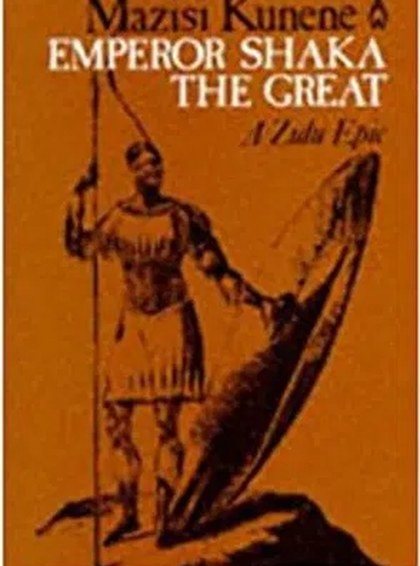
He composed his epics in isiZulu rather than translating into it. His books include Emperor Shaka the Great, Anthem of the Decades, Zulu Poems and The Ancestors and the Sacred Mountain, published in the Heinemann African Writers Series and the UNESCO Collection of Representative Works.
Diplomat
He went into exile in 1959 and was a founding member of the Anti-Apartheid Movement in Britain. Oliver Tambo appointed him ANC Chief Representative in London in 1962; he later represented the ANC in Europe and the United States and served as its Director of Finance. He joined uMkhonto weSizwe in 1963 and trained in Algeria.
Scholar
MA, University of Natal, then SOAS, University of London. Nineteen years at UCLA and a visiting professorship at Stanford, with teaching posts at the University of Iowa, the National University of Lesotho and the University of KwaZulu-Natal, where he returned to a full chair in 1993.
Laureate
UNESCO named him Poet Laureate of Africa in 1993. In 2005 he became the first Poet Laureate of democratic South Africa, inaugural recipient of the national prize, and a National Living Treasure. Honorary Doctorate, University of Natal, 2000.
A legacy that keeps growing
Into exile. Founding of the Anti-Apartheid Movement in Britain.
ANC Chief Representative in London, appointed by Oliver Tambo.
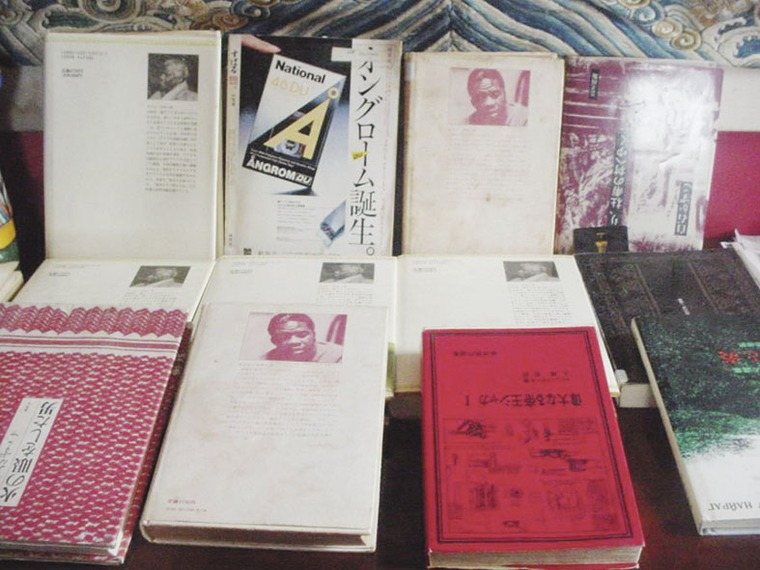
Emperor Shaka the Great published in London by Heinemann and in Tokyo by Iwanami Shoten.
UNESCO names him Poet Laureate of Africa. Resolution of the City of Los Angeles. Returns home.
First Poet Laureate of democratic South Africa. National Living Treasure. The Foundation Trust is established.
The US Consul General cites the family's Amahlongwa programme: matric pass rate from 33% to 89%.
Google features him on its global homepage with a Doodle on 12 May.
UKZN appoints the inaugural Mazisi Kunene Research Chair.
An epic body of work
World Literature Today called Emperor Shaka the Great a monumental undertaking and achievement by any standards.
Read in Tokyo early
A Japanese collection of his poetry appeared in 1973. In 1979 Iwanami Shoten, one of Japan's most respected publishers, issued Emperor Shaka the Great in two volumes, translated by Tetsu Tsuchiya, in the same year Heinemann published the English edition in London.
He lectured in Japan in 1970 and 1983. After seeing Hiroshima for himself he wrote A Message from Hiroshima. That exchange is held today in the Glenwood house, in the room Where East Meets Africa, and in the poem An Elegy to Fei Ling.
Representing a nation in exile
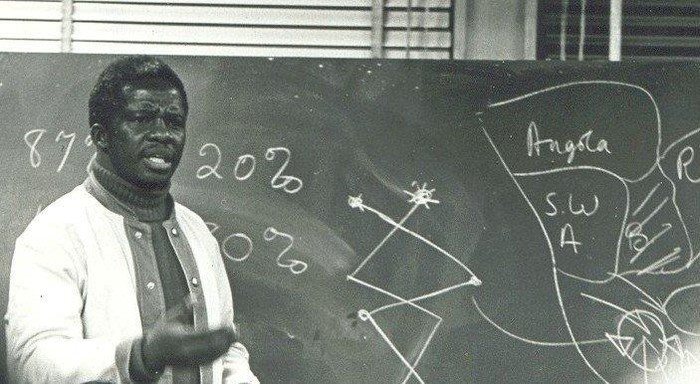
In London he lectured at the London School of Economics while representing the ANC in Britain. The map on the blackboard behind him shows southern Africa under occupation: Angola and South West Africa.
He was also founder and director of the South African Arts Appeal, an international exhibition of world artists mounted in support of the liberation struggle.